


The bus boycott, Dexter Avenue, the march from Selma and a memorial to the truth.
Claudette Colvin And Rosa Parks
In March 1955 Claudette Colvin was arrested for refusing to give up her seat on a Montgomery bus. On December 1, 1955, Rosa Parks was sitting in the front row where Black passengers were allowed to sit, refused to move and was arrested. The local leader E. D. Nixon saw her arrest as a test case, and Jo Ann Robinson's Women's Political Council put out a flyer that began: Another Negro woman has been arrested and thrown in jail because she refused to get up.
The Bus Boycott
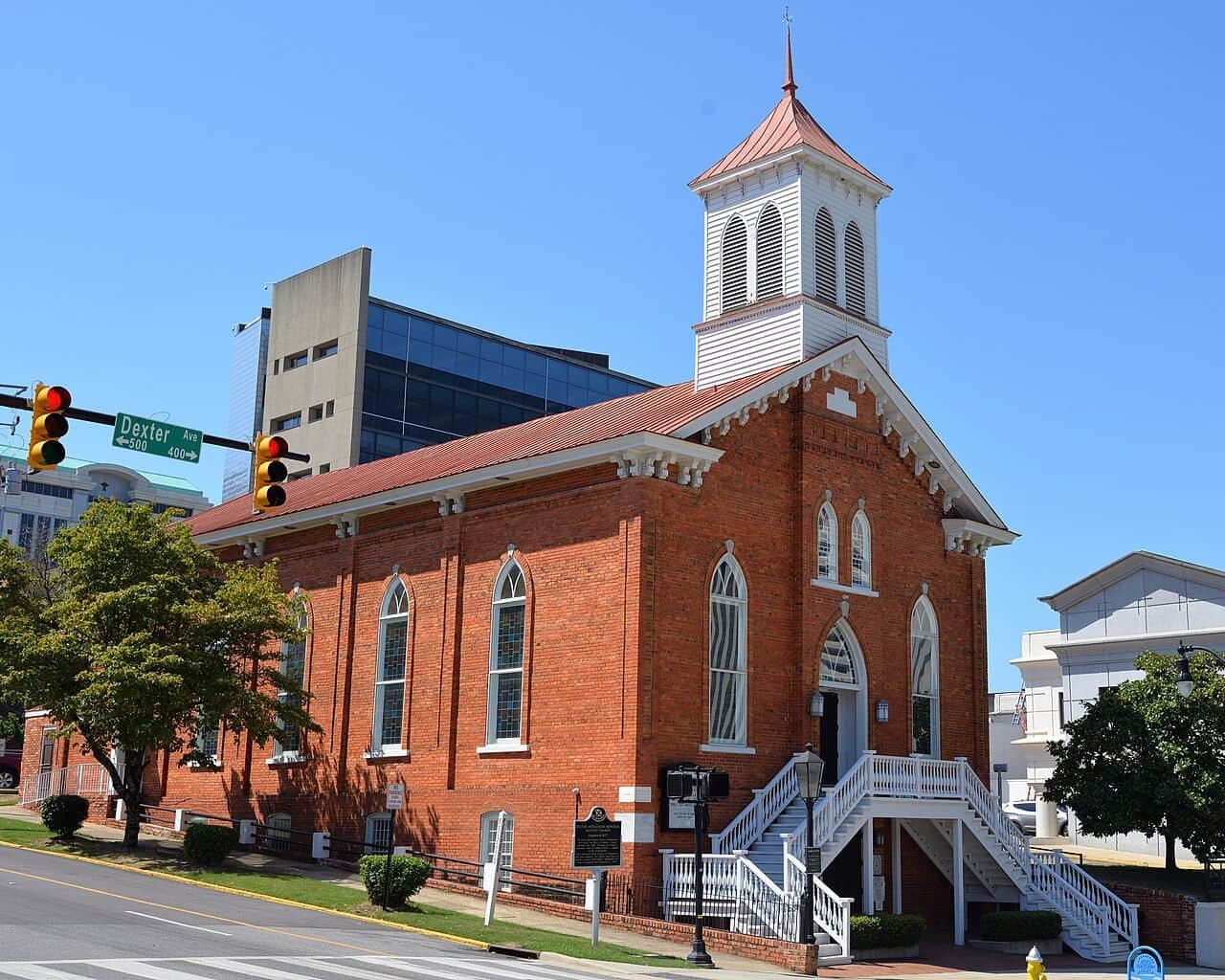
Montgomery's Black community stopped riding the buses. Martin Luther King Jr., the pastor of Dexter Avenue Baptist Church, agreed to lead the new Montgomery Improvement Association, with Nixon as treasurer, and King organized the boycott from his basement office at the church, steps from the Alabama State Capitol. Instead of riding the buses, boycotters ran a system of carpools.
In Browder v. Gayle the federal courts declared Alabama's and Montgomery's bus segregation laws unconstitutional, and the boycott officially ended on December 20, 1956, after more than a year. Dexter Avenue Baptist Church became a National Historic Landmark in 1974.
From Selma To The Capitol
On March 25, 1965, at the end of the march from Selma, 25,000 people marched to the steps of the State Capitol in Montgomery. King told them that the end they sought was a society at peace with itself, a society that could live with its conscience. On August 6, 1965, President Lyndon Johnson signed the Voting Rights Act.
Peace And Justice
On April 26, 2018, the Equal Justice Initiative, founded by Bryan Stevenson, opened the National Memorial for Peace and Justice in downtown Montgomery, a memorial to the Black victims of lynching in the United States. Its 805 hanging steel monuments stand for each county where a documented lynching took place. The Legacy Museum opened the same day, telling the history of slavery and racism in America through to mass incarceration today.
Black Montgomery Today
From Dexter Avenue to the memorial, Montgomery's Black history is part of the city's streets, and Black-owned restaurants, salons, shops and brands are part of everyday Montgomery.
Shop Black-owned businesses in Montgomery on CashBlack.
Photo Credits
Dexter Avenue Baptist Church, where Martin Luther King Jr. was pastor. Photo: Punkairwaves, CC BY-SA 4.0, Wikimedia Commons