Culture
Granville T. Woods and the Railway Telegraph Patent of 1887
Culture · · 4 min read
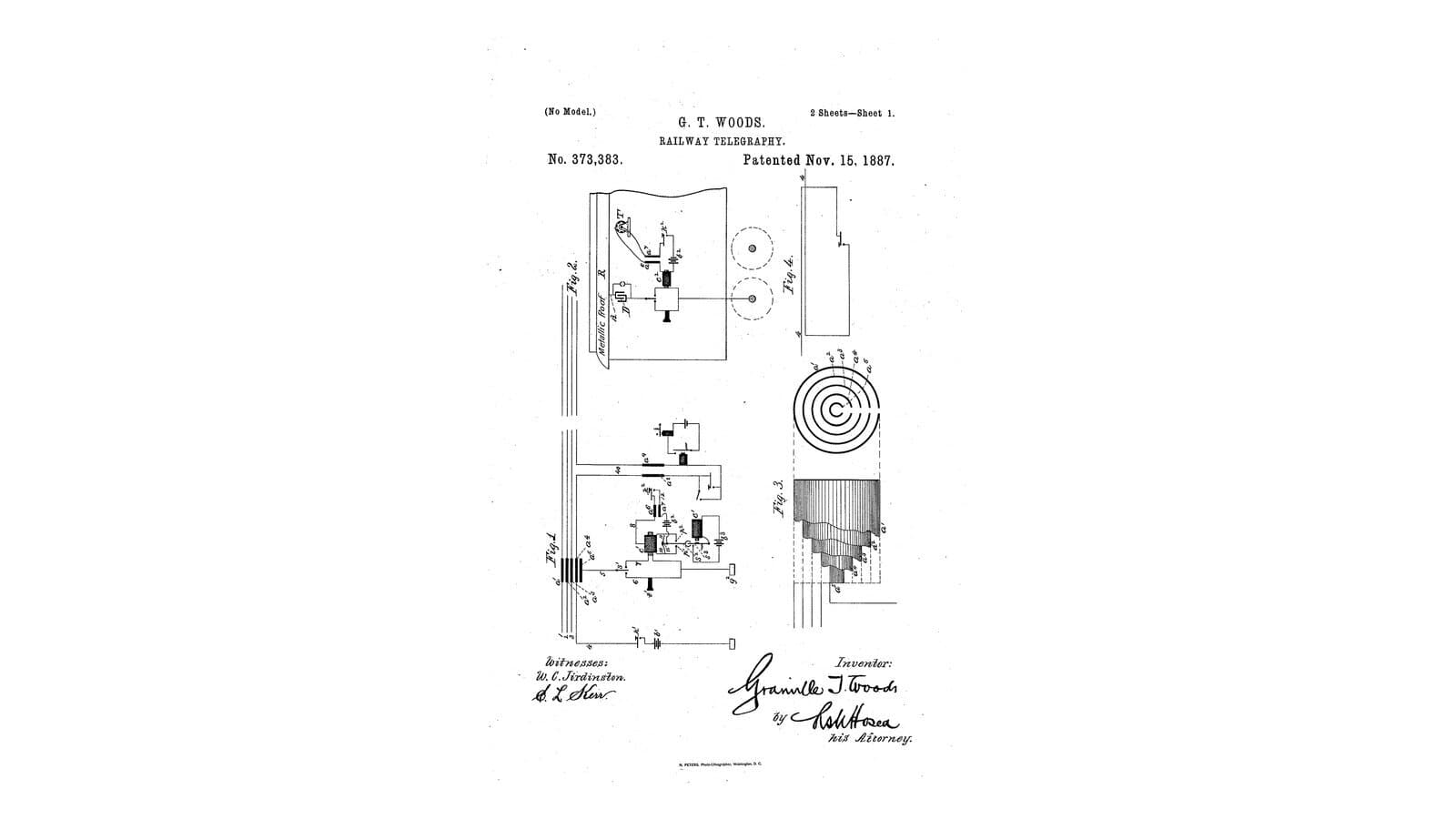
On November 15, 1887, Granville T. Woods of Cincinnati, Ohio, was granted U.S. Patent No. 373,383 for railway telegraphy. The goal was easy to say and hard to pull off: let a moving train stay in touch with the stations along its line.
This is today's entry in Today in Black Business History, our look back at the founders and inventors who built the base Black business stands on.
What the Patent Did
Telegraph wires already ran beside the tracks. Woods saw them as a way to reach the trains themselves. His patent places metal plates in the telegraph lines and uses the metal roof of each car as a matching plate, so the two act like the plates of a condenser and carry signals across the gap to the moving train with no physical contact.
The patent describes using the telegraph wire "without impairment of its ordinary use", so the line kept doing its normal job at the same time. The National Inventors Hall of Fame puts the result plainly: his railroad telegraphy allowed moving trains to communicate with rail stations and with each other.
Railroads moved the country's goods, mail and people. A way to keep a train in touch with the line while it was moving had real value to every company running one.
Who Was Granville T. Woods?
Woods was born in Columbus, Ohio, on April 23, 1856. According to the National Inventors Hall of Fame, his formal schooling ended at age 10. As a teenager he worked on railroads and in steel mills. He later became chief engineer on a British steamship, then in 1876 spent two years training at a technical college in New York City.
He went on to earn nearly 60 patents, the first for a steam boiler furnace. One was an overhead conducting system that let rail and trolley cars run on electric current instead of steam power. Patents of his were later bought and used by General Electric and the Westinghouse Air Brake Co.
When Thomas Edison filed patent suits against him over the multiplex telegraph, Woods won. Edison then offered him a partnership, and Woods turned it down. He died on January 30, 1910, and was inducted into the National Inventors Hall of Fame in 2006.
The Business Angle
Woods did not just invent. He built a company around his work. Patent No. 373,383 is assigned to The Woods Patent Electric Company of Cincinnati, and the Hall of Fame records his Woods Electric Co. there, which he moved to New York City in 1890.
That is the part of his story that speaks loudest to Black business today. An idea is worth most when the person who had it owns it, defends it and builds on it. Woods owned his patents, defended them against Thomas Edison and turned down a partnership to stay independent.
Shop Black-Owned Today
Every big idea starts on paper. Back the Black-owned founders building their own businesses right now.
Effie's Paper is a Black-owned Etsy shop based in New York, selling notebooks, stationery, coffee mugs and travel mugs. A good notebook is where the next big idea gets sketched.
Moore Stationery is a Black-owned Etsy shop based in Jacksonville, Florida, selling what its CashBlack page calls money tools for the savvy budgeter. Useful for anyone planning a venture of their own.
Find more brands in the CashBlack store directory. Tap through from CashBlack, shop as normal on the brand's own site and earn cashback on your order.
Frequently Asked Questions
What Did Granville T. Woods Patent on November 15, 1887?
He was granted U.S. Patent No. 373,383 for railway telegraphy, a system that used the telegraph wires beside the track to pass signals between the line and moving trains.
How Many Patents Did Granville T. Woods Earn?
The National Inventors Hall of Fame says he earned nearly 60 patents in his lifetime.
Did Granville T. Woods Beat Thomas Edison?
Yes. Edison filed patent suits against Woods over the multiplex telegraph and Woods won, according to the National Inventors Hall of Fame. Edison then offered him a partnership, which Woods declined.
Every time you shop Black-owned, you back the next generation of builders. Join CashBlack for free and earn cashback while you do it.